How to evaluate ODM communication accessory suppliers? Learn core R&D assessment dimensions including structure, acoustic design, material testing & mass production capability.
In ODM customization projects for communication headsets, noise‑reduction headsets, PTT control modules and other accessories, many buyers tend to focus on quotations and lead times while overlooking suppliers’ actual R&D strength. At the sampling and mass‑production stages, problems frequently emerge, such as structural defects, fragile cables, sub‑standard acoustic performance, and incompatibility with customers’ two‑way radio terminals. These issues result in project delays, inventory waste, and even equipment failure in field operations.
When selecting an ODM partner for communication accessories, sample appearance alone is not sufficient. Comprehensive assessment should be carried out around the following core dimensions of genuine R&D competence.
Structural and Material R&D: Foundation for Product Durability
Communication accessories are mostly deployed in high‑intensity working environments. Components including headset housings, ear cushions and cable assemblies directly determine the overall service life.
Competent ODM manufacturers are capable of material selection and validation: lightweight high‑strength carbon‑fiber housings, anti‑aging PU ear cushions, high‑flex special‑purpose cables, and structural design for detachable connectors.
Many suppliers can only recolor existing generic molds, without capabilities for structural simulation, flex‑resistance testing or high‑low temperature aging tests. A well‑known pain point for communication headsets is that once the inner copper core of an integrated cable breaks, the whole headset becomes unusable. ODM providers with solid R&D expertise can intervene in early‑stage structural design and adopt modular detachable‑cable solutions. Damaged cables can be replaced separately instead of discarding the complete unit, greatly lowering customers’ subsequent operation and maintenance costs.
Suppliers without independent structural and material R&D can only copy off‑the‑shelf molds and hardly resolve real‑world field pain points.
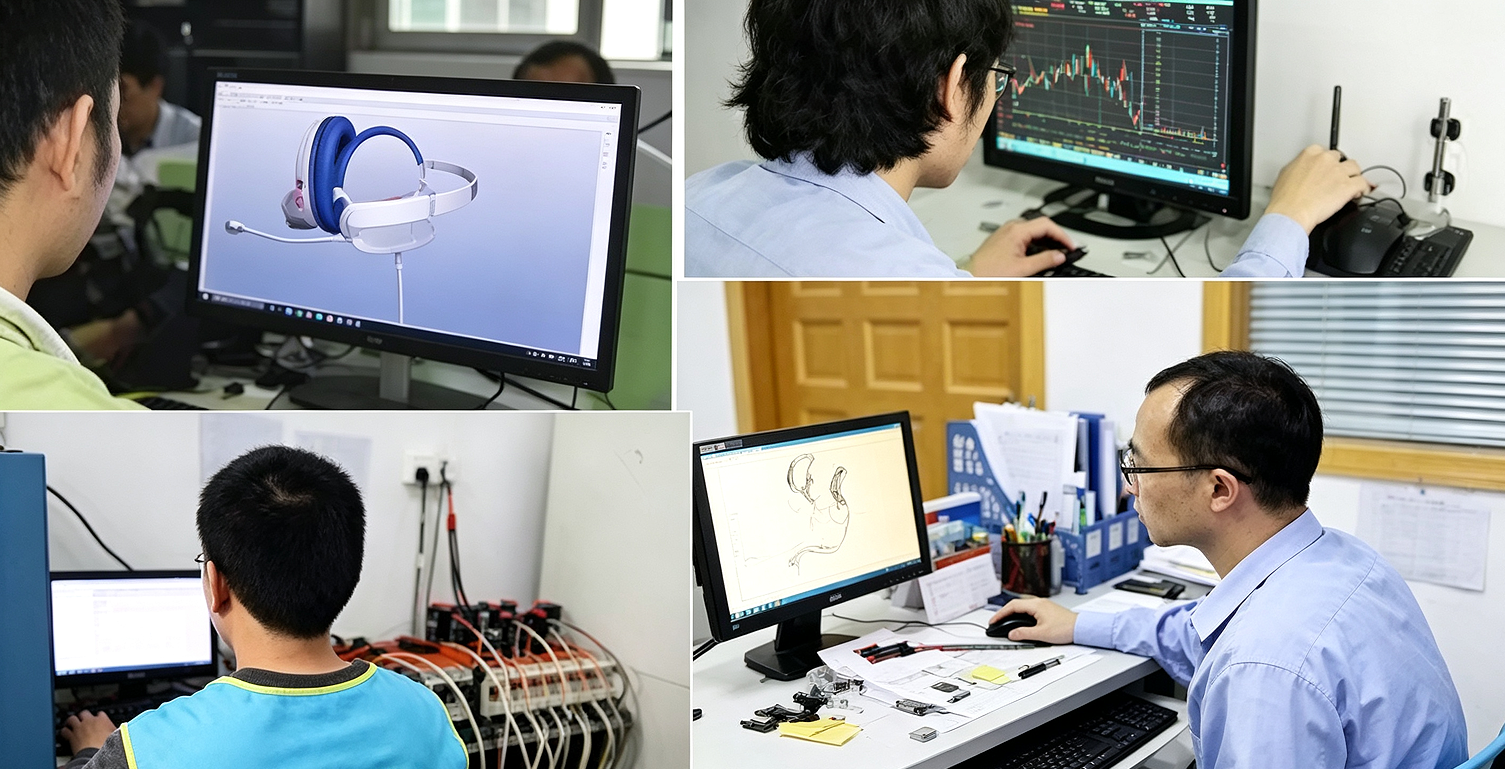
Acoustic and Circuit R&D: Core Barrier for Communication‑grade Products
While consumer‑grade headsets prioritize audio quality, industrial communication headsets focus on noise suppression, voice pickup clarity and PTT signal compatibility.
A reliable ODM R&D team shall own in‑house acoustic tuning and circuit design capabilities. It can customize ambient noise reduction and microphone pickup gain according to application scenarios, and achieve compatibility with protocols of various radio brands.
If a manufacturer merely assembles housings without independent acoustic and circuit tuning capacity and has to adopt ready‑made solutions, hidden risks will occur: muffled voice in noisy construction sites, incompatible PTT trigger signals, abnormal volume output, and limited room for later modification and optimization.
Customization Capability: End‑to‑end Workflow from Requirement to Delivery
Genuine ODM service goes far beyond logo printing or shell repainting. The complete R&D workflow covers requirement analysis, ID design, structural tooling, circuit development, prototyping, reliability testing and iterative optimization.
- Support for modular customization: housing material, cable connectors, microphones and PTT modules adjustable upon request;
- In‑house testing laboratory for pull‑resistance, high‑low temperature, dust‑proof and noise‑reduction performance, instead of full reliance on third‑party labs;
- Iteration efficiency: turnaround for revised prototypes when requirements change, and ability to support fast iteration.
Industry‑specific Know‑how: Insight into End‑user Real‑world Pain Points
Communication accessories serve demanding scenarios including security duty, emergency rescue, mining & heavy‑industry operations, and large‑event dispatching.
Manufacturers focused only on production rather than industry applications can only deliver products based on theoretical parameters. ODMs with deep industry accumulation understand field‑specific pain points, such as cable fatigue under heavy‑duty use, long‑wear comfort, and communication reliability under high‑noise conditions.
Drawing on abundant project experience, they can proactively avoid potential defects at the solution phase and provide design suggestions tailored to actual working conditions, instead of simply fulfilling passive requests.
Compliance and Production‑oriented R&D
For overseas projects, certifications such as CE and RoHS are mandatory requirements. Qualified ODM suppliers design products complying with certification standards from the R&D phase, rather than carrying out urgent rectification after prototype completion.
Furthermore, R&D work needs to align with mass production. Design should take mold yield, component supply chains and spare‑part manufacturability into consideration, to avoid the dilemma of “perfect prototypes yet high failure rates in mass production”.
When sourcing ODM‑made communication accessories, buyers are purchasing not merely hardware, but a full set of R&D problem‑solving capabilities. Appearance can be imitated, whereas material validation, acoustic tuning and scenario‑oriented solution accumulation cannot be replicated in a short period.
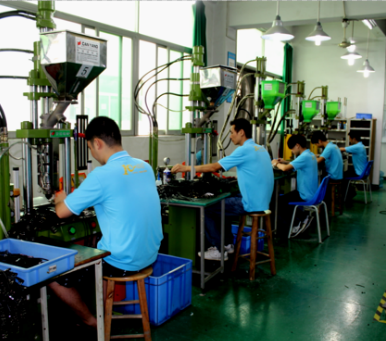
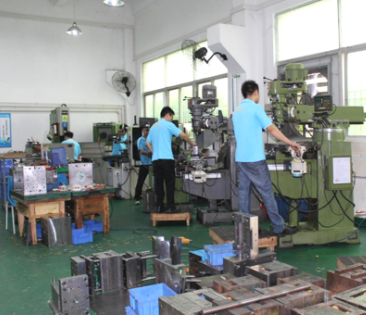
Power‑Time specializes in ODM customization for communication accessories. We maintain a complete in‑house R&D team covering structure, acoustics and electronics. Custom development is available for carbon‑fiber communication headsets, modular detachable‑cable systems, PTT control units and more. From requirement evaluation and prototype iteration to compliant mass production, we deliver comprehensive communication‑accessory solutions for industry clients.